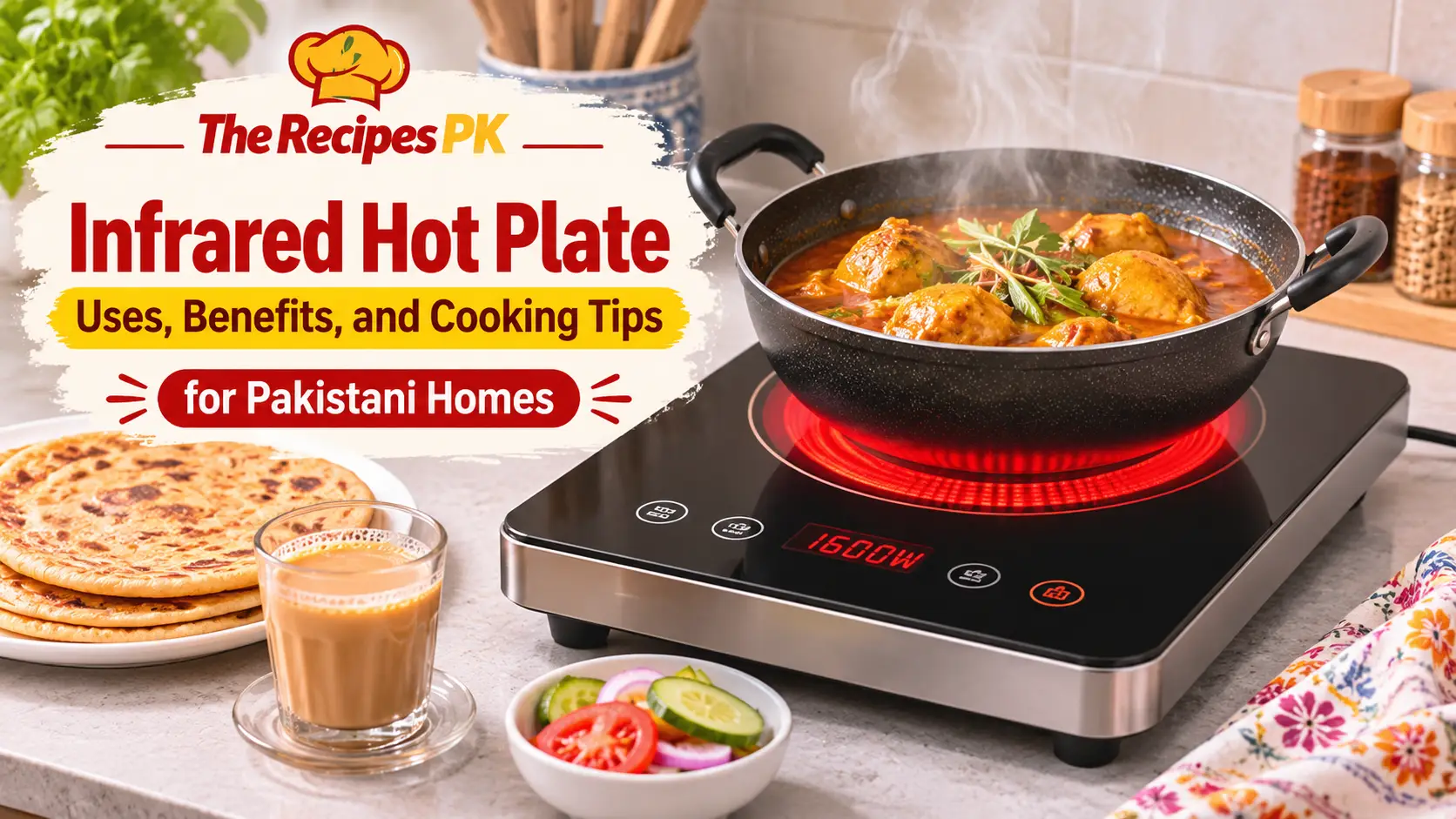
Choosing between an infrared hot plate and a gas stove can be confusing when setting up a kitchen or looking for convenient cooking options. Both appliances have their own advantages for everyday cooking. In this guide, we compare their energy sources, temperature control, cookware compatibility, cleaning requirements, and electricity dependency to help Pakistani households understand the differences and choose an option that best suits their cooking needs.
Uses and Benefits of Infrared Hot Plate
An infrared hot plate is an electric cooking appliance that uses a heating element to produce heat through an infrared cooking surface. It can be used to prepare everyday meals such as roti, paratha, omelettes, chai, daal, rice and chicken salan. For Pakistani households, it can be a convenient additional cooking option, especially in small kitchens, apartments and homes where an extra cooking space is needed.
With adjustable temperature settings and compatibility with many types of cookware, an infrared hot plate offers a different way to handle everyday cooking without using a gas flame.
What Is an Infrared Hot Plate?
An infrared hot plate is an electric stove that heats cookware using an electrically heated element beneath a glass or ceramic surface. The generated heat transfers through the cooking surface to the pot or pan placed on it.
Unlike induction cookers, infrared hot plates do not rely on magnetic fields to heat cookware. This means they can generally work with stainless steel, aluminium and cast iron utensils, provided the cookware is suitable for the appliance.
How Does an Infrared Hot Plate Work?
An infrared hot plate works by converting electrical energy into heat through a heating element located beneath its cooking surface.
When switched on, the heating element becomes hot and transfers heat through the glass-ceramic surface to the cookware. The pot or pan then heats the food inside it.
Most models have adjustable temperature controls that allow users to select different heat levels for boiling, frying, simmering and reheating.
One important thing to remember is that the cooking surface remains hot even after switching off the appliance. Always allow it to cool before touching or cleaning it.
Common Uses of an Infrared Hot Plate in Pakistani Kitchens
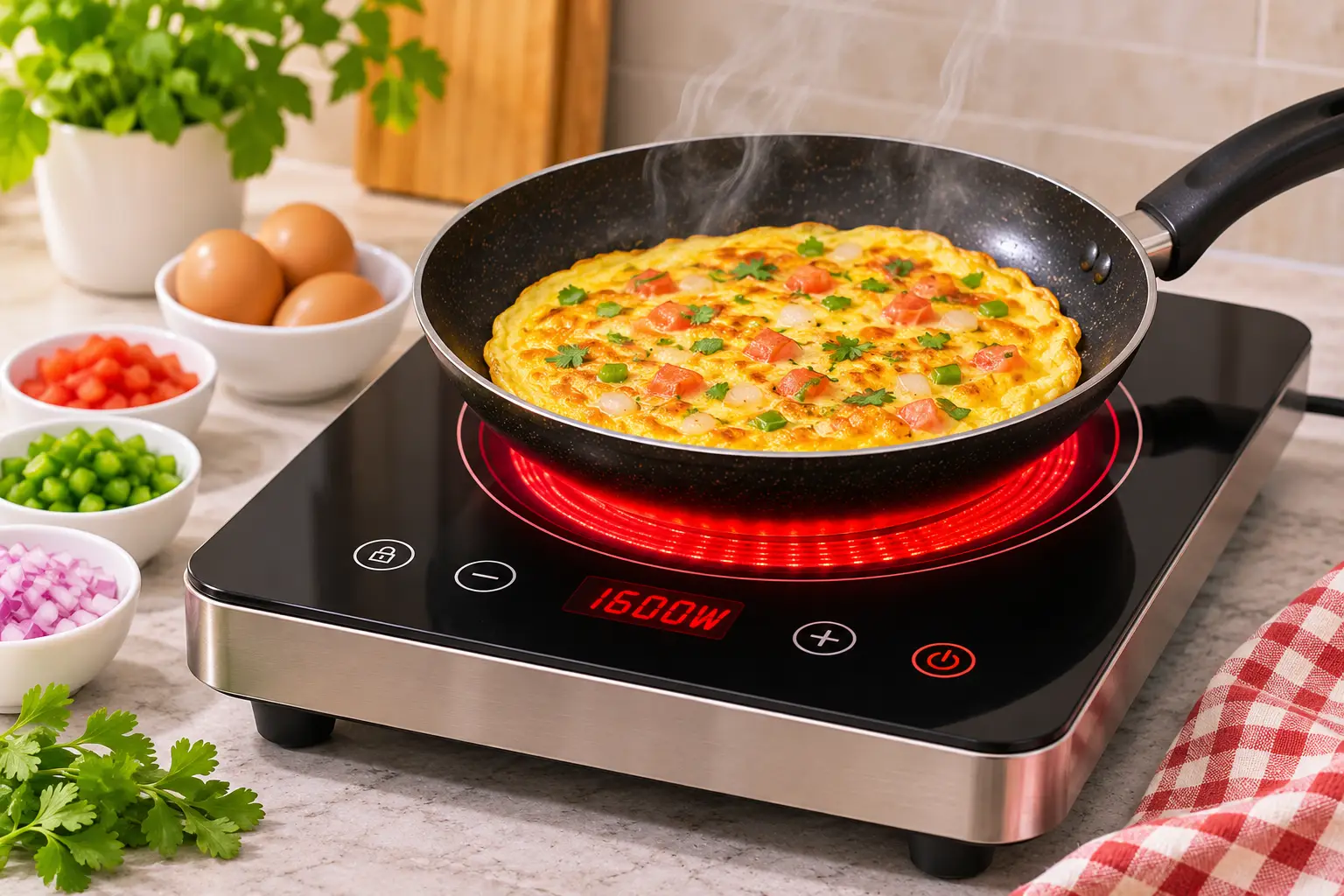
An infrared hot plate can be used for several everyday cooking tasks, from preparing breakfast to cooking traditional Pakistani meals.
1. Making Roti and Paratha
You can prepare roti and paratha using an infrared hot plate with a suitable flat-bottom tawa. Place the tawa on the cooking surface, allow it to heat and cook your roti or paratha as usual.
Check the manufacturer’s instructions before using a particular tawa or cookware.
2. Preparing Chai and Coffee
An infrared hot plate is useful for boiling milk, preparing doodh patti and making coffee. Its adjustable heat settings help control boiling and reduce the chances of milk spilling over.
3. Cooking Eggs and Omelettes
You can prepare fried eggs, scrambled eggs and omelettes using a suitable frying pan. Start with medium heat to avoid overcooking or burning the eggs.
4. Cooking Pakistani Salan and Daal
An infrared hot plate can handle everyday Pakistani dishes, including chicken salan, daal, vegetable curry and other gravy-based meals.
Use a suitable pot and adjust the temperature according to the cooking stage. Medium heat works well for simmering, while higher settings may be needed initially for boiling.
5. Boiling Rice and Pasta
You can boil rice, pasta and vegetables in a suitable cooking pot. Once the water reaches boiling point, reduce the temperature to maintain a gentle simmer.
6. Heating Food and Preparing Snacks
An infrared hot plate is also useful for reheating leftovers, warming milk, preparing sauces and making quick snacks when you need an additional cooking space.
Benefits of Using an Infrared Hot Plate at Home
An infrared hot plate offers several practical benefits for households looking for an alternative or additional cooking appliance.
- No gas connection required: It operates using electricity, making it an option for homes that want an additional electric cooking appliance.
- Cookware flexibility: It generally works with different types of cookware, unlike induction cookers that require magnetic-compatible utensils.
- Adjustable temperature: Different heat settings help with boiling, frying and simmering.
- Compact design: Many models are small enough for apartments, hostels and kitchens with limited counter space.
- Easy operation: Most models have simple controls that are easy to understand.
- Convenient cleaning: The smooth glass surface of many models is easier to wipe than traditional gas stove burners, once completely cool.
However, an infrared hot plate depends on electricity, and its running cost depends on wattage, cooking duration and your electricity tariff.
Infrared Hot Plate vs Gas Stove: Which Is Better for Pakistani Homes?
An infrared hot plate is useful for electric cooking, while a gas stove remains a familiar option for everyday Pakistani meals. The better choice depends on your household’s cooking habits, electricity supply and gas availability.
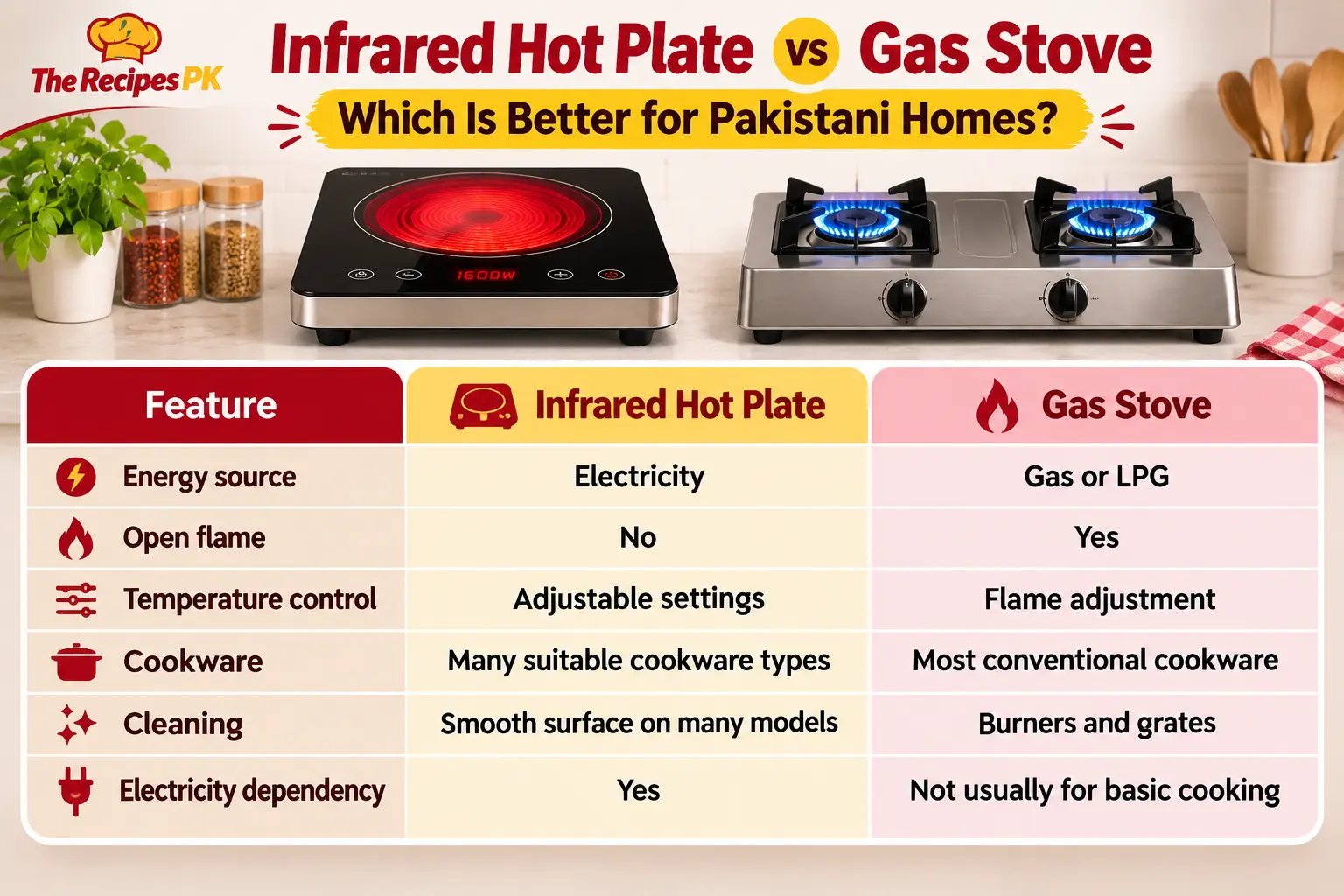
For households experiencing gas supply interruptions, an infrared hot plate can provide an additional cooking option. However, it cannot replace a gas stove during electricity outages unless you have a suitable backup power source.
Which Utensils Can You Use on an Infrared Hot Plate?
Most infrared hot plates support different types of cookware, including stainless steel pots, aluminium pans and cast iron utensils.
For better cooking results:
- Choose flat-bottom pots and pans.
- Use cookware that sits steadily on the surface.
- Avoid damaged or uneven cookware.
- Check whether glass or ceramic cookware is approved by the manufacturer.
- Choose a pan size suitable for the heating area.
Unlike induction cookers, infrared hot plates generally do not require magnetic cookware.
Practical Cooking Tips for Pakistani Women
Follow these simple tips to get better cooking results and use your infrared hot plate safely.
- Start with a medium temperature setting for everyday cooking.
- Use flat-bottom cookware for better heat contact.
- Avoid placing empty pots on the hot surface for extended periods.
- Reduce the temperature when simmering daal or salan.
- Use a suitable tawa for making roti and paratha.
- Avoid dragging cookware across the glass surface.
- Switch off the appliance when cooking is complete.
- Allow the surface to cool before cleaning.
Safety Tips When Using an Infrared Hot Plate
An infrared hot plate is generally safe when used according to the manufacturer’s instructions, but its cooking surface becomes extremely hot during operation.
Keep these precautions in mind:
- Keep children away from the hot cooking surface.
- Never touch the surface immediately after cooking.
- Use a suitable electrical socket and avoid overloaded extension boards.
- Keep water away from electrical connections.
- Do not place plastic, paper or flammable materials on the appliance.
- Avoid using the appliance if its power cord or glass surface is damaged.
- Allow sufficient space around the appliance for ventilation.
How to Clean and Maintain an Infrared Hot Plate
Clean your infrared hot plate after it has cooled completely. Switch it off, unplug it according to the manufacturer’s instructions and wipe the surface with a soft, slightly damp cloth.
Avoid steel wool, abrasive scrubbers and harsh cleaning products that can scratch the glass surface.
For stubborn food stains, use a cleaning product recommended by the manufacturer. Regular cleaning helps maintain the appliance’s appearance and performance.
Is an Infrared Hot Plate Suitable for Everyday Cooking in Pakistan?
Yes, an infrared hot plate can be suitable for everyday cooking in Pakistani homes if the appliance has appropriate wattage, reliable electrical support and enough cooking capacity for your household.
It can be particularly useful for:
- Working women who need an additional cooking option.
- Students living in hostels or rented accommodation, where electric cooking appliances are permitted.
- Newly married couples setting up a small kitchen.
- Small families living in apartments.
- Households that want an alternative when gas is unavailable.
However, consider electricity consumption, cooking requirements and appliance safety before purchasing one.
Frequently Asked Questions
1. Can we make roti on an infrared hot plate?
Yes. You can make roti using a suitable flat-bottom tawa placed on the infrared hot plate. Always check the manufacturer’s cookware recommendations.
2. Can we cook Pakistani food on an infrared cooker?
Yes. You can prepare daal, chicken salan, rice, vegetables, chai and many other Pakistani dishes using suitable cookware.
3. Does an infrared hot plate consume a lot of electricity?
Electricity consumption depends on the appliance’s wattage, temperature setting and cooking duration. Check its power rating before purchasing.
4. Is an infrared hot plate better than an induction cooker?
Both have different heating methods. Infrared hot plates generally support a wider range of cookware, while induction cookers require compatible magnetic cookware. Your choice depends on your cooking needs and preferences.
5. Can we use normal pots on an infrared hot plate?
Yes, many regular stainless steel, aluminium and cast iron pots can be used. However, they should have a suitable flat base and be approved for the appliance.
6. Is an infrared hot plate safe for daily use?
Yes, when used correctly. Follow electrical safety instructions, keep children away from the hot surface and allow the appliance to cool before cleaning.
Final Thoughts
An infrared hot plate can be a practical addition to a Pakistani kitchen. From making chai and omelettes to preparing roti, paratha, daal and salan, it offers flexibility for everyday cooking.
Before choosing one, consider its wattage, cooking surface, temperature controls, safety features and electricity requirements. The right appliance can make everyday kitchen tasks more convenient while giving your household another cooking option.